
What is the difference between sports media and social media? The generally accepted definition for sports media is reporting or writing based on sports, while social media is known as platforms on the internet that enable users to network or create content. Both sports media and social media coincide and make for a unique and one-of-a kind way for sports to be watched and covered.
Now let’s talk about the use of social media by sports media. In the past 10 years, there has been an increase in the use of social media by various sports media organizations. Twitter, Instagram, and Facebook are among some of the social media platforms most commonly used by these news outlets. While social media is best known as a tool for people to communicate, how else do sports outlets use social media? I’ve listed below the 5 main ways that sports media outlets use social media:
1. Content Consumption
What is the next best thing to being able to watch a game in person? Most people would say watching it on T.V. However, social media has made it possible for fans to watch not only live streams of gameplay but short clips of highlights and extra content as well (interviews, practices, etc.). This lets fans feel like they are part of the game, having as much audience experience as possible without having to physically be there.
2. Relaying New Information
Breaking news: sports media outlets can give fans new information the second it comes out. Reporters and analysts get updates and have various connections through social media that allow them to release information and news to the public before other organizations. Fans won’t have to wait until the next edition of the print/online newspaper to find out which team Kevin Durant is signing with next. Livestreaming on social media platforms such as Twitter and Instagram ensure that fans will have the most updated and up to speed news on their favorite sports.
3. Discourse
Prior to social media, how did people communicate? Primarily through face-to-face interactions. Until its conception, there was no way for sports fans to interact with one another other than physically being in the same space or game. Now, with social media sites such as Twitter and Instagram, fans can communicate with each other without actually having to physically be there, and even sometimes with the players themselves. Below I provided an example on Instagram of how fans use social media for discourse:
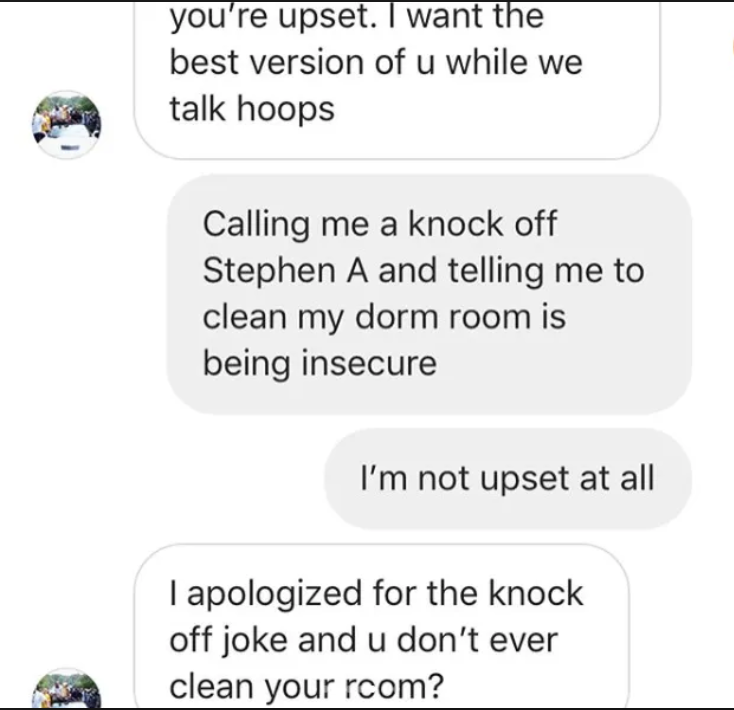
This image is a prime example of how the discourse in sports has changed. Before social media was invented, you wouldn’t see fans interacting with players unless it was before or after a game. Now, at the push of a button, fans can discuss sports or anything they want to with their favorite sport stars. In this image, we see Kevin Durant, Golden State Warriors forward, talking with a fan. This conversation is also an example of “trash talking,” which is back and forth arguing. This is a common phenomenon in sports. We see many types of communication happen in sports media, but negative communication is certainly as prevalent as positive communication.
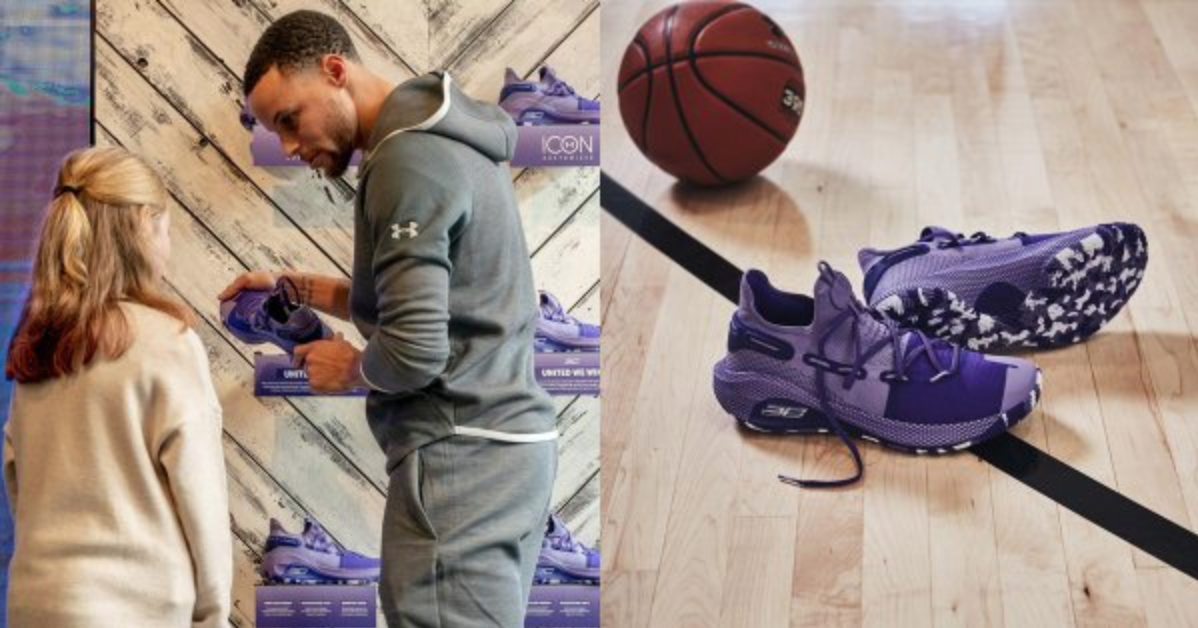
Steph Curry gave us a great example of how athletes can communicate positively with the community. A 9 year old girl named Riley Morrison reached out to Steph back in November letting him know that his signature shoe didn’t come in her size. Steph not only sent her back a handwritten letter, but he even included a pair of his shoes in her exact size. It’s clear to see that athletes like Steph use their platform to make a change for the better, which shows us how alike athletes are to regular people.
4. Awareness of Social Issues
As a society, we gather information and news in a variety of different ways. This includes reading the newspaper, listening to the radio or watching a news channel on television. But what is sports social media’s role in relaying information outside of the game? Some see social media as an asset in informing an audience of what happens outside of sports and the issues that our society faces. One website, called the Players Tribune, includes a collection of stories about athletes, written by athletes, that documents their personal stories. This can be stories from their sport careers, or their personal lives, or challenging experiences that they might have had. This gives fans insight into how athletes and fans are more alike than one would think. On the other side of the argument, some believe that sports media do not have a place to speak on social issues. Companies such as ESPN are taking strong stances against reporters talking about social issues, as seen in this ESPN policy: https://awfulannouncing.com/espn/new-espn-social-media-policy.html
5. Competition for Fandom
Have you been a fan of the same sports team your entire life? Loyalty is a huge part of being a sports fan. Sometimes you follow a team for a long time because you grew up liking them, or because they play in your hometown/state. For one particular fan, this is not the case:
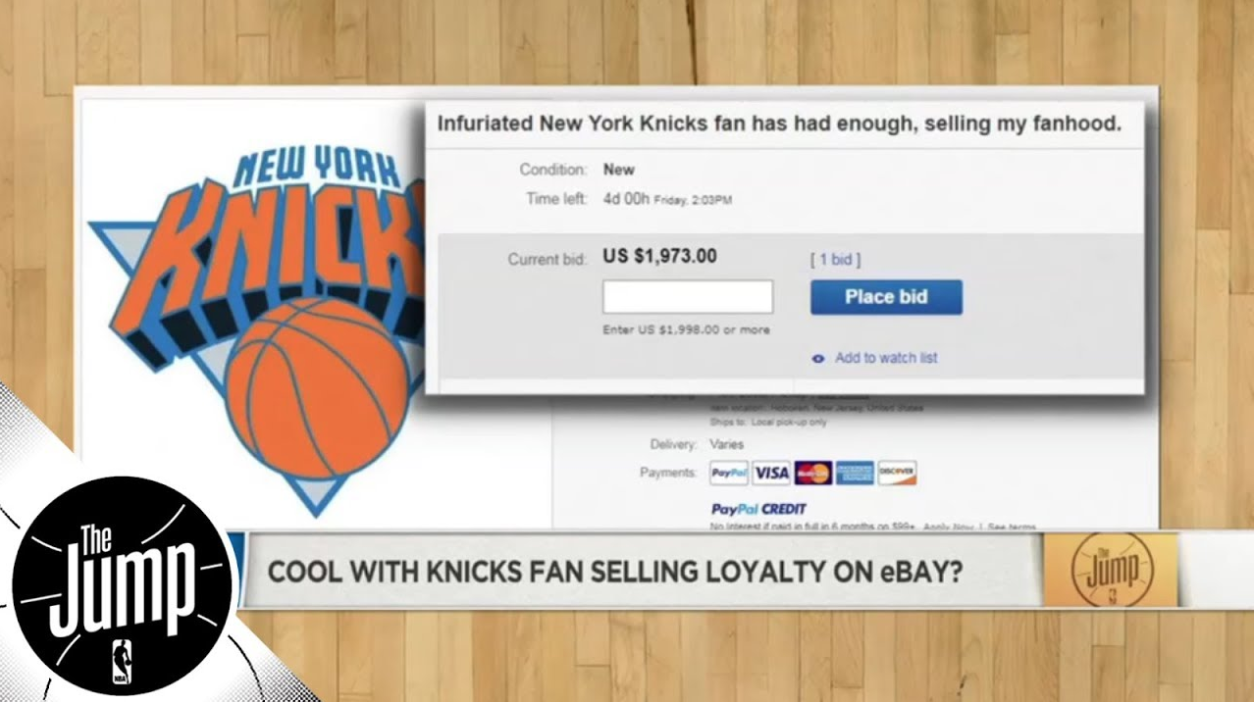
Here we can see an extreme and hilarious case of changing fanship, as played out by this New York Knicks fan who went viral after he put up his “fanhood” on eBAY. Although eBAY is technically not a social media platform, it is an online site that allows interaction. Fans desire to root for and support the teams that are the most successful, and it is easy to see that in some cases winning and doing well in a sport can be valued more than loyalty.
Whatever the reason for your fandom may be, it is noteworthy to point out the level of competitiveness that exists between teams to get more fans and more attention in sports. Sports teams social media accounts have promotions, campaigns, and events to try and get more followers and fans that look at their pages. One example of a promotion done by a professional sports team was done by the Seattle Seahawks in partnering with Starbucks:

Here, you can see that the Seahawks worked with Starbucks to produce co-branded cup sleeves. This move makes sense for the two organizations, as Starbucks and the Seahawks are both based in Seattle and have many customers and a large fan base. Teams in many professional sports make similar joint ventures with other companies, in the hopes of gathering a larger following.
Part of a sports social media personnel’s job is to get information out to a wide range of audiences, and having a large fanbase can increase the likelihood of that happening. Below I included a link to an article that ranks NBA teams’ Twitter followers from most to least: https://sportsgeekhq.com/rankings/nba-social-media-ladder/
To sum it all up:
There aren’t only five ways to look at the usefulness that social media provides for sports media. But it is difficult to discuss the impact that sports media has without looking at platforms such as Twitter, Instagram, Facebook or even Snapchat. Social media shapes how we think, and what we think. Understanding its effects will help fans carefully consider how sports media can be useful on these platforms and how they might be misleading or have negative impacts.
Sources:
- “Sports Digital Marketing & Social Media Marketing.” Sports Geek, sportsgeekhq.com/.
- Bucholtz, Andrew, et al. “All Things Sports Media.” Awful Announcing, awfulannouncing.com/.
- Google Images, Google, images.google.com/.
- “6 Ways That Social Media Has an Influence in Sports.” NISM Online, 17 Dec. 2018, nismonline.org/6-ways-that-social-media-has-an-influence-in-sports/.
- Billings, Andrew C. Sports Media: Transformation, Integration, Consumption. Routledge, 2014.
- “7 Great (and Not so Great) Sports Marketing Campaigns.” Bannerflow Blog, 18 Jan. 2019, blog.bannerflow.com/7-great-sports-marketing-campaigns/.
 Jack McIntyre's Portfolio